







From Strangers to Family: What I Learned About Culture and Community in Seville
When most people picture studying abroad in Spain, they think about flamenco, tapas, and sun-soaked plazas. What they don’t tell you about is waking up and brushing your teeth next to three strangers. Or trying to explain a joke to your host señora in Spanish when your vocabulary barely covers “I’m hungry.” That’s the real study abroad experience, and it's way better than the postcard version.
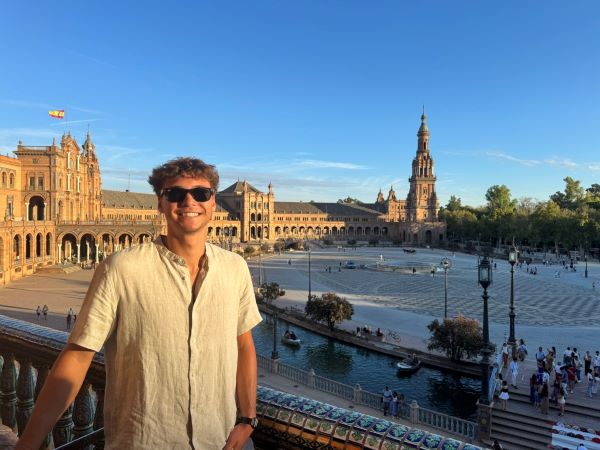
A pic of me for mom back home | Plaza de España
Learning to live with strangers (and actually liking it)
Living with three people I had never met before felt odd at first. I noticed everything from their routines and their habits to the small ways they moved through our shared space. But that strangeness doesn’t last long. Within weeks, what felt unfamiliar became comfortable. The strangers became something closer to a temporary family. The shift from awkward coexistence to genuine connection was one of the most unexpected experiences of my semester.
A big part of that anchor was my host señora. Seeing her nearly every meal gave my days a rhythm I didn’t know I needed. Her home-cooked Spanish meals were unlike anything I’d grown up eating in California, and every dinner was both a gift and a challenge. In the early weeks, I’d fill in the gaps in my Spanish with a nod or a laugh, hoping she’d read the expression and move on. Slowly, those awkward silences became real conversations.
How Spanish stopped feeling like a subject and started feeling like a tool
Before Seville, my Spanish was basic. I could manage short sentences, and understand simple ideas. But studying abroad in Spain means immersion whether you want it or not. Two fluent roommates, an intermediate Spanish class, and a city that doesn’t slow down for you forces rapid growth. I started listening differently and I stopped translating in my head. Shop workers, overheard conversations on the street, menus, street signs; all of it became a daily lesson I hadn’t signed up for but began to appreciate.
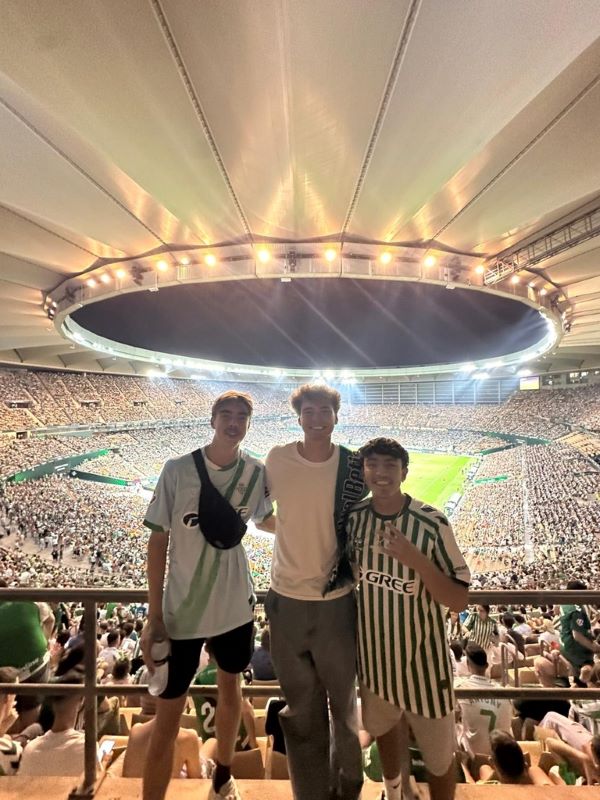
A Real Betis football game with friends | Estadio La Cartuja
The moment I realized I was just communicating, rather than translating or rehearsing, was one of the most clarifying experiences of my time there. Language stopped being a wall and became an open door. And behind it was a much deeper connection to the city and the people in it.
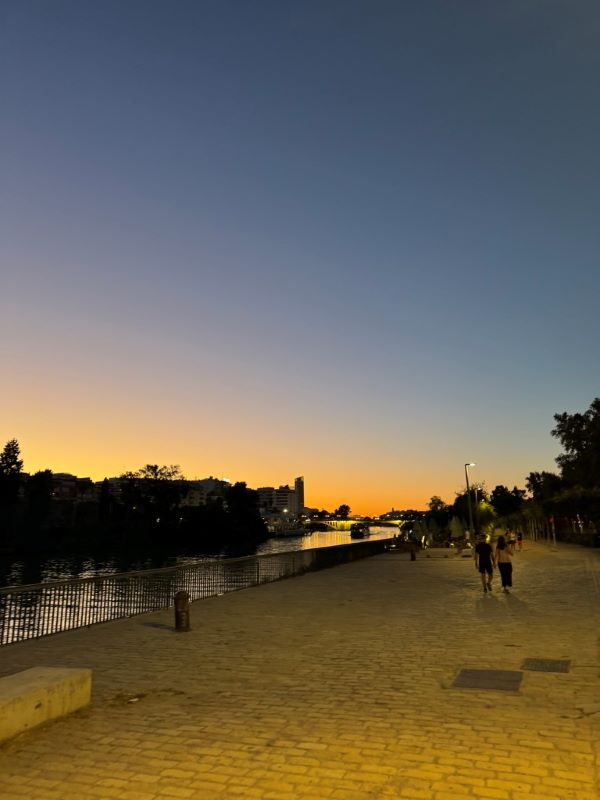
Walking the river at sunset | The Guadalquivir River
Trading the California coast for cobblestone streets
I had never lived in a city before. Growing up near the California coast, I was used to open air, wide horizons, and the kind of quiet that gives you space to think. Seville’s urban areas are the opposite of that. Voices from the street, scooters below the window, and footsteps in the hallway contribute to a constant noise. The apartments are compact. There’s no ocean. But the city offers its own kind of beauty. A café, a market, a park was a short walk or bike ride away, making cars unnecessary. The architecture alone is worth the trade-off: glowing stone, ceramic tiles, ornate balconies, and dramatic courtyards that make you feel like you’re living inside an active museum.
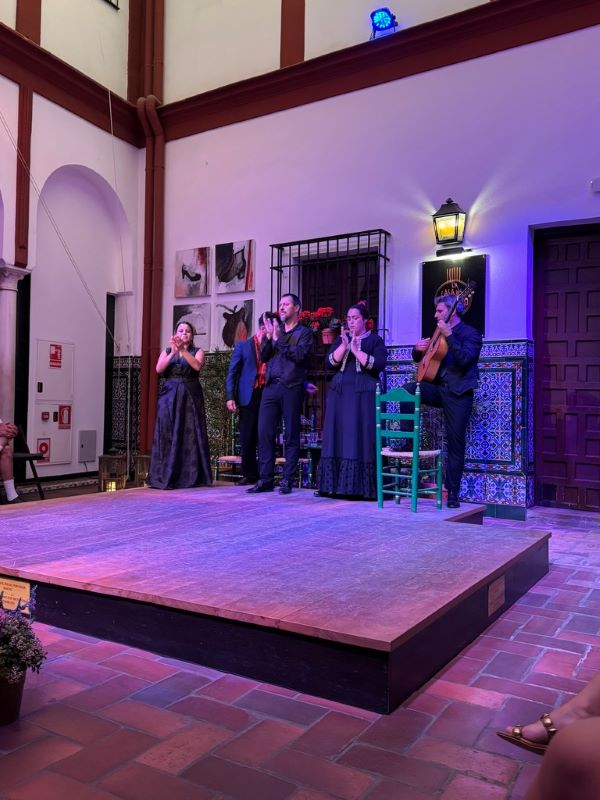
A local flamenco show – incredible performers! | Triana
What Spanish culture actually looks like up close
Cultural immersion in Seville is when you’re sat at a dinner table for two hours after the meal has ended talking, laughing, and taking your time. That’s sobremesa, and it’s a Spanish tradition that reframes what a meal is even for. Tapas aren’t just food; they serve as a reason to gather. The pace of daily life is slower, more intentional, and deeply family-centered in a way that felt foreign at first and foundational by the end of my time there.
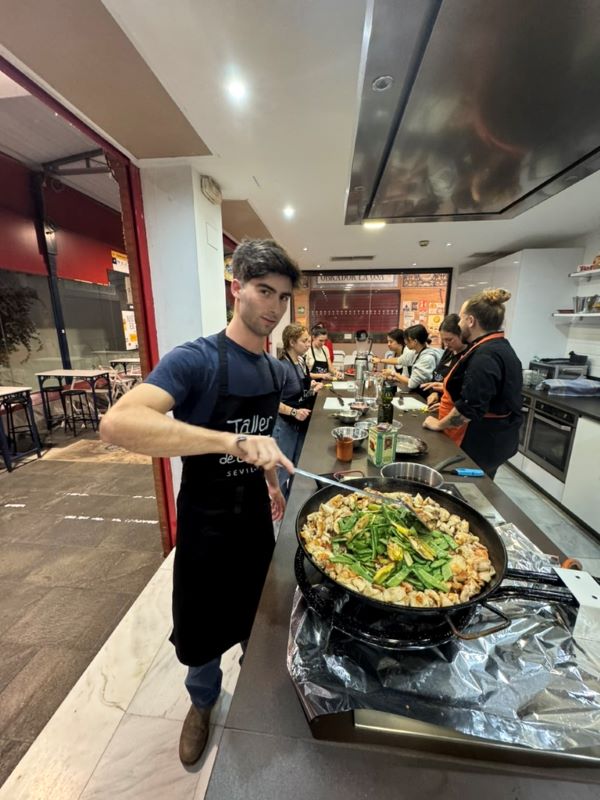
A paella cooking class with my roommate | Triana Market
When I look back at my first reflections from early in the semester, I can see how much my perspective shifted. Then, I was observing Seville from the outside. Now, I feel woven into its rhythm. I’ve learned how to adapt, how to communicate across discomfort, and how to appreciate a different way of living. This experience has changed how I think about culture, community, and what it means to feel at home somewhere new. Part of Seville will stay with me long after I’ve left.
