








Claim up to $1,250 in flight credits!
Get up to $1,250 in flight credits or grants toward study or internship programs abroad when you apply by June 30, 2026. See our Official Rules for full details.
CEA CAPA Education Abroad
First-Year Experience Abroad on Your Campus

Conference Details
Dates
May 11, 2021
Location
Online
Reception
n/a
First-Year Experience Abroad on Your Campus
The first year of a student's college career is critical for their success and retention. In addition to supporting retention and student success, a First-Year Experience (FYE) program abroad can help a campus energize its student body around international
education and set an institution apart from its peers. In this presentation we heard from campuses that successfully implemented FYE programs, and why and how those programs came to fruition.
Presentation Resources
Didn't get a chance to attend our FYE webinar? Here's a recording to get you up to speed!
Q&A
Our Q&A responses were answered by Mary Cook from Colorado School of Mines, John Peters from Marist College, and CEA staff who facilitate our FYE Abroad programs.
Q: Are the courses abroad taught by CEA, Mines/Marist professors, or a combination of the two?
A: For the Mines program, the majority of courses were taught by faculty from SKEMA and the students were in class with other students. Mines transferred the coursework back as Mines credit. Mines did teach one of their own courses online, but they do not plan to repeat that in the future based on student feedback. In coming terms, Mines students will take all of their courses from SKEMA. For the Marist program, two Marist faculty live and teach in Florence for a full semester and teach a first-year seminar based on a local theme and a writing course. Two of the five classes a Marist Florence student will take abroad are taught by a Marist faculty member and the other classes are taught by local faculty. In Dublin, the classes are designed by Marist and taught by local faculty at the host affiliate.
Q: Are FYE Abroad students at Mines or Marist required to take a language course?
A: Marist requires Florence students to take at least one semester of Italian language. Mines has no language requirement but we do enroll the students in a language course while in-country. The course satisfies a mid-level humanities requirement.
A: The majority of promotions and recruiting initiatives are handled through the Admissions/Enrollment office for both Mines and Marist. They are the experts in recruiting in the high school space. Both Mines and Marist mentioned that strong collaboration with the Admissions/Enrollment arm is important. Mines sends out a regular newsletter to prospective families and includes the FYE Abroad opportunity, with a heavy emphasis put on the impact on an international experience and one’s career potential.
Q: Could Mary and John
speak to the benefits that stood out most to each of them in their process of
developing the FYE Program?
A: (Marist) The main benefit for me and my office (Marist) in freshman programming is the relatively clean slate that one starts with vs. establishing a program along the more beaten path of SO/JR/SR semester abroad. Because freshmen require much more contact and mentoring, your program almost automatically requires you to establish mechanisms for high-impact learning and the establishment of a living-learning community. As Mary noted, because these students have never been to college, whatever do you, that is college. So you're able to set a high bar for academic and personal commitment and have more freedom for creative programming.
Q: Do you have any information on short-term programs that are 4 weeks or less? Our institution does not have the capacity for a semester-long program.
A: CEA welcomes the opportunity to explore short-term options with our U.S. university partners. Short-term FYE programs do exist and can be successful when intentionally paired with fall programming. We have experience in our Custom & Faculty-led division and will be happy to share best practices.
Q: What advice do you have for study abroad offices when working with admissions/enrollment? Would the presenters speak more to their diplomacy work with nay-sayers?
A: The Mines relationship with admissions is key to this program. The initial thought came out of admissions, due to overcapacity in applicants. The Study Abroad Office works closely with them through the process and by providing marketing. Admissions is on the selection committee along with study abroad teams. If you run into naysayers, the more you listen and hear their concerns, they turn out to be the same concerns that we deal with when we send anyone abroad. The concern comes up that the students are young, although that is a real plus to working with the students that don’t know anything different!
An advantage for Marist is that the VP of enrollment management sees the FYE abroad program as a selling point of the college. Parents will say I don’t want my child on a freshman program, but knowing you have one means they will be okay when they go in the future. The admissions office is an ally and Marist had support from the president.
Q: How do you handle
setting up programs like this without a Risk Management office, or with a one-person
office?
A: (Marist) Infrastructure for Marist's Florence and Dublin programs are quite different, but both work well. While we have 4-5 full-time employees in Florence we only have one, 10-month a year, contract person in Dublin. Schools with smaller home offices and infrastructure would do well to lean on their partner(s) more heavily vs. if one could more fully staff all positions and assume broader responsibilities onsite. All colleges have some sort of risk manager, even the de-facto one if something were to go wrong. A conversation with a Provost would be a good place to start in terms of developing support for the idea.
Q: Do you consider transfer students for the program as well, or strictly freshmen? What about non-traditional students?
A: (Mines) We focus primarily on first-year students since we have done course matching for this cohort. This said, we will allow other students in the program if they have not yet fulfilled the general requirements we offer in the program. Both of our cohorts, thus far, have included at least one student who is at a slightly higher level (first-semester Sophomore) because we were able to secure the necessary courses through the partner university. We have not yet encountered a non-traditional student but would be open to allowing participation.
Q: Do you think that First-Year experiences like this are popular due to low campus engagement due to COVID?
A: Both Mines and Marist enrolled students prior to the pandemic. There is no evidence to show that the strong enrollment numbers were tied to the pandemic. There may be a slight increase in interest this year, but demand was strong prior to the pandemic.
How to contact CEA
Do you have more questions or want to continue the conversation? Read more about CEA's FYE Abroad programs and/or contact your Regional Director today!
Attendees
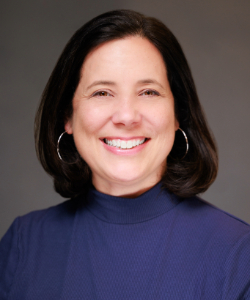
Caroline Walsh is responsible for the alignment and growth of CEA CAPA’s current product portfolio and expansion i...
Read More
Read More
Chief Innovation Officer