








The best leaders are ones who don’t stop learning, and as a lifelong learner myself, I feel fortunate to have engaged in two opportunities to further my knowledge in First Year Experience programming this year at two important conferences.
At the Annual Conference on the First Year Experience I filled my notebook with the current thought and priorities being driven by leaders focused on giving U.S. college students the most successful start to their academic career. Attended predominantly by the folks who make up the breadth of work within the First-Year Experience – admissions, student affairs, faculty, and academic advisors – education abroad folks like me were thin on the ground. This allowed me to focus fully on the sessions with a clear goal: to carry the learning forward into the rest of the year, shaping our partner work on first-year experiences abroad and sharing insights with onsite teams so our delivery remains firmly rooted in best practice for student success across their full degree, not just one semester abroad.
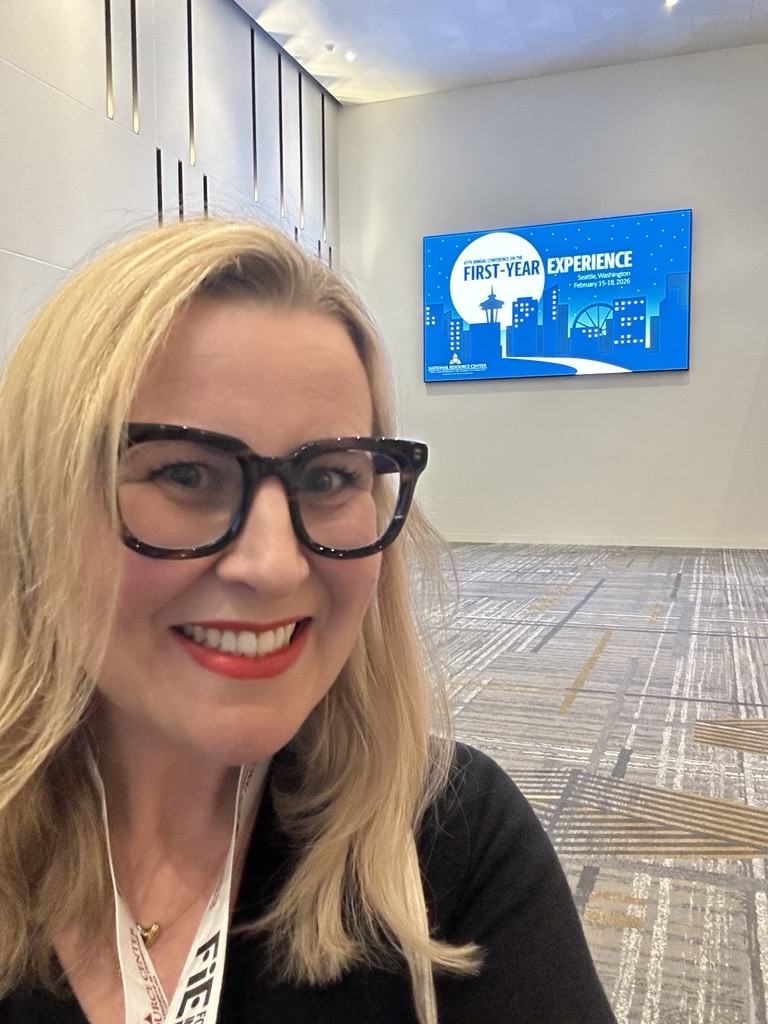
A range of key themes were clearly prioritized, with numerous sessions dedicated to topics including first-year seminar pedagogy, career exploration, peer mentorship, and retention trends. And whilst the breadth of topics makes it difficult to distil my learnings, I did experience two recurrent motifs surfacing whilst there and in reflection: how we conceptualize and name the first-year experience which in turn guides how we do the work, and how belonging is increasingly emerging as a fundamental priority to get right early.
The working definition of the first-year experience is "not a single program or initiative, but rather an intentional combination of academic and co-curricular efforts within and across postsecondary institutions."1 often referred to as a "constellation" of practices.2 Throughout the week in Seattle, I repeatedly heard calls to move from this metaphor of a constellation to that of an ecosystem, reframing FYE not as a collection of related practices but as a dynamic system in which interdependence, porous boundaries, and collective functioning, rather than discrete roles, are what generate impact for students and institutional leverage on campus.
First Year Experience Abroad frequently serves as a way for education abroad offices to position themselves as a strategic solution alongside other key institutional stakeholders—such as admissions, student affairs, and academic affairs—so this framing resonated strongly with the reality I see designing and delivering these programs. In the small scale, iterative development processes that first‑-year experience abroad programs often represent‑, bringing together cross-functional‑ perspectives consistently leads to more agile, creative, and innovative opportunities for both students and institutions. This blurring of roles and cross‑pollination of ideas is a clear example of how an ecosystem approach rather than discrete ownership can generate speed, creativity, and more responsive program design.
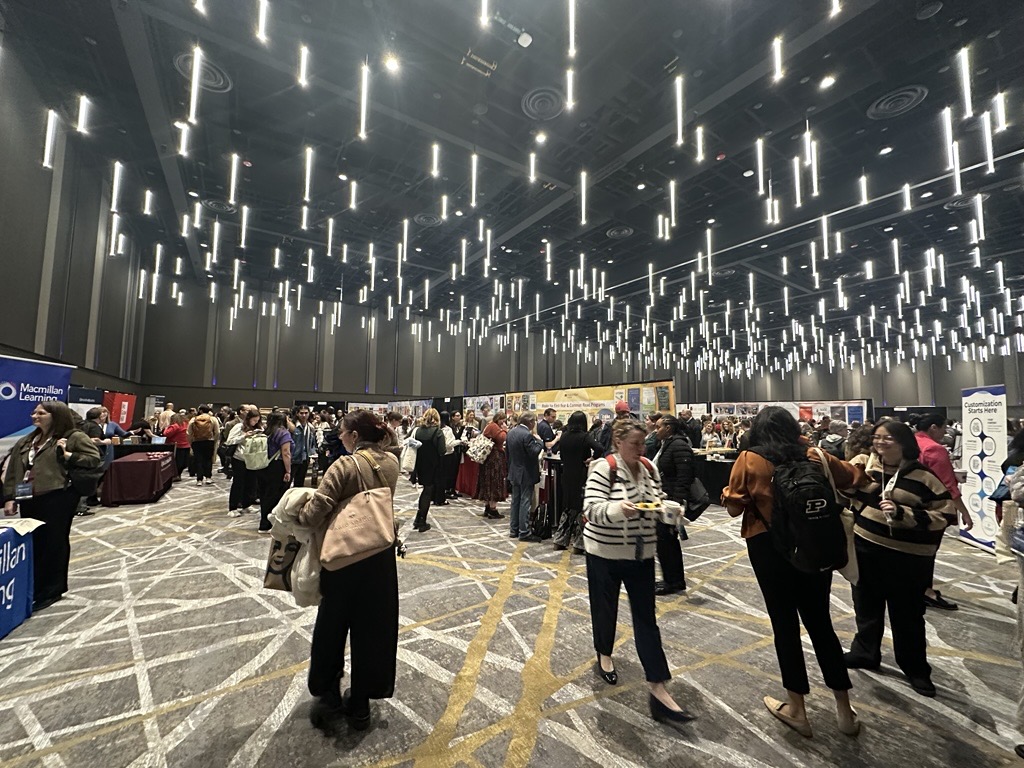
Another key refrain that sung through the corridors in both Seattle, and on to Nashville where I next took my notepad, was that of student belonging. With a statistic that elicited an audible gasp from the room during the opening plenary session Dr. José Antonio Bowen cited a recent study that found 72 percent of U.S. teenagers have used AI for companionship3. As the pace of societal change accelerates and institutions rapidly move to adapt to meet it while ensuring the scaffold of education delivered to students positions them for success in this changing world, one thing we almost all can agree on is a need for human connectivity and communication alongside, or in spite of, increasing reliance on digital alternatives.
In response, belonging, whether as an outcome or a design principle, was repeatedly cited as a focus area for cultivating environments in which students feel connected to their learning and to each other in shared community. We can spend all the time and expertise in the world considering the many elements we might build into the higher education experience, but if a student does not feel connected to their institution, they will be able to retain little of it. This surfaces what I would argue is the fundamental purpose of the first year: to cultivate and inspire student belonging. This can include considering whether the environments we establish serve every student so they can see themselves succeeding in the future; ensuring foundational skills are developed so academic progress is built systematically over time; connecting classroom experiences to broader goals and aspirations so the university experience feels like a tangible step on a longer life roadmap; and, I’d argue most importantly, developing the curiosity and critical thinking demanded by what we might call the “real world” capacities that are less threatened or even whose currencies are rising by the advancement of AI.
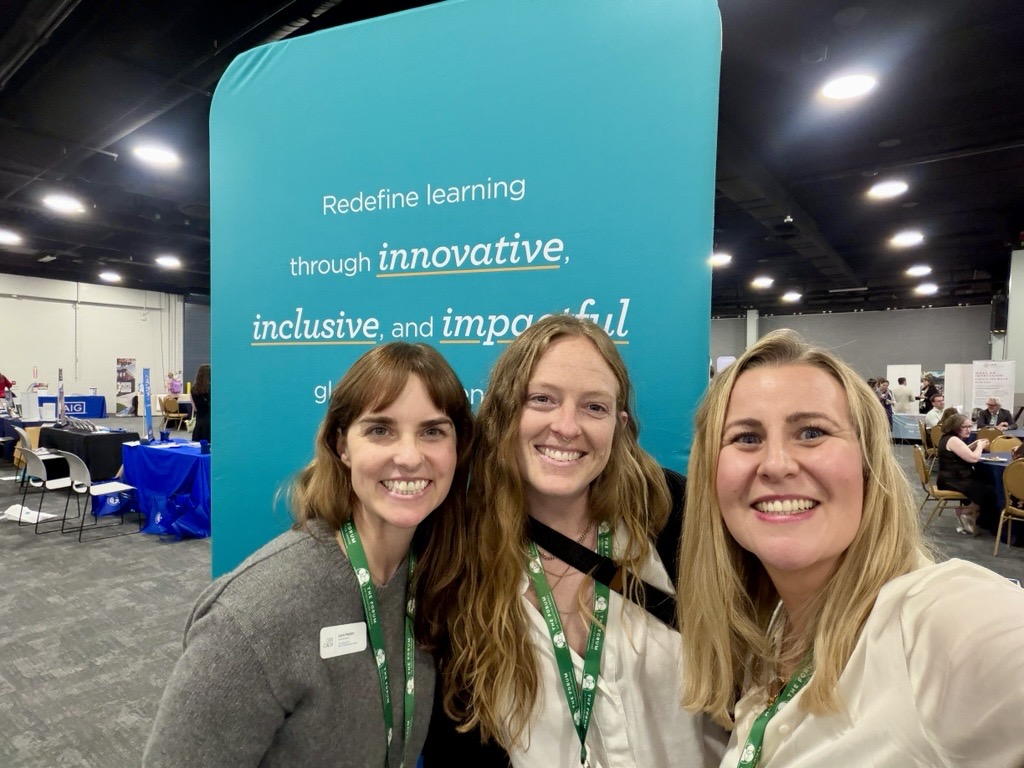
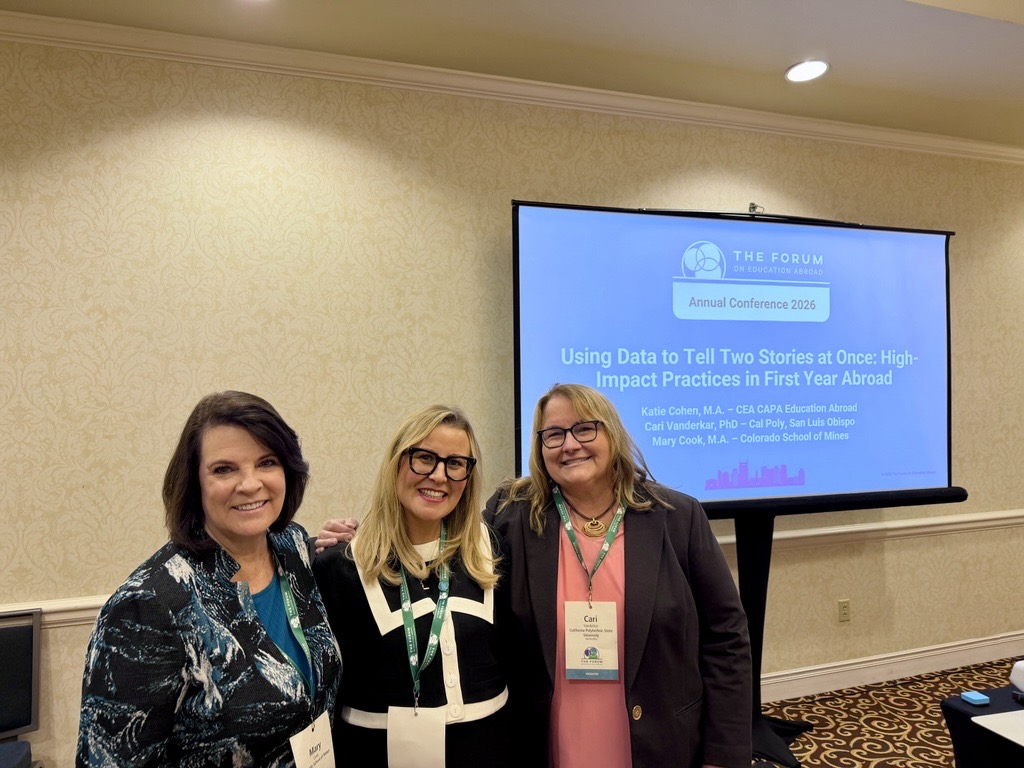
After I packed my boots and headed to Nashville, I attended The Forum on Education Abroad Annual Conference, where I was able to share some newfound knowledge with fellow international educators. If Seattle offered some conceptual food-for-thought, Nashville became the testing ground and I continued to dialogue around belonging, calling it out as one of the most important pillars that underpin our CEA CAPA FYE Abroad philosophy, design, and delivery. I delivered a presentation about high-impact practices in FYE Abroad programs alongside CEA CAPA partners from Colorado School of Mines and CalPoly SLO where, in a conference thematised by storytelling, we asserted our position at the beginning of that story for FYE Abroad, and argued that the way in which we articulate the value and potential of these programs will have an impact on how they are shaped and formalized as they grow in popularity for institutions. Using Mines and Cal Poly as case studies, we evidenced how student-centric missions can be held fast as FYE Abroad programs answer wider institutional priorities – such as recruitment and retention – and how this requires a data-informed mindset to be persuasive in new settings with potentially new audiences. Taken together, these conversations reaffirmed for me that first-year experience abroad is no longer a peripheral innovation, but a strategic space where belonging, academic momentum, and institutional priorities intersect. As these programs continue to grow, our challenge is to remain intentional. Let us ground our storytelling in data, design collaboratively, and stay close to what students actually need to feel connected, capable, and confident from day one.
References
1 Koch, A. K., & Gardner, J. N. (2006). Creating a first-year experience that fosters student success. Columbia, SC: University of South Carolina, National Resource Center for the First-Year Experience and Students in Transition.
2 Keup, J. R. & Young, D. G. “Stars in the Constellation” (2019)
3 Common Sense Media/NORC study, 2025
About the Author
Katie Cohen is the Senior Director of Strategic Global Programs at CEA CAPA, where she leverages her extensive operational experience in study abroad to advance the organization’s commitment to excellence and innovation in global education. Want to learn more about developing an FYE Abroad program? Visit our FYE Abroad website and get in touch with your Institutional Relations partner to explore opportunities to develop FYE Abroad on your campus.