









Academic Life Abroad: What’s Different, What’s the Same
This semester has been an interesting one full of adaptations. As I’m adjusting to new schedules, new foods, and new places, it can be hard to find stability, especially with academics. In this post, I’ll be talking about the differences and similarities between my classes in Prague versus those at my home institution, the University of Delaware.
The first thing I had to adapt to was how much longer the classes are in Prague. Sure, I’d have maybe one three-hour class in Delaware that meets once a week, but while I’m abroad here, my entire schedule is like that. Adjusting from 60-minute classes that meet two to three times a week to these lengthy three-hour classes was a struggle at first. I wasn’t used to being stuck in the classroom for so long, and honestly, I was having trouble focusing. We always get a 10-to-20-minute break, a good time for resetting your brain, and focusing on the rest of the class. I realized the best thing I could do for myself for these long classes is three simple things: bring a full water bottle, have a snack or meal for break time, and get a good night’s rest the night before.
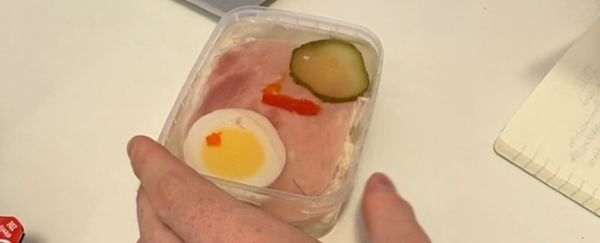
This shows a common snack from the communist time period called aspic.
Although adapting was tough at first, once I mastered these three things, everything started to flow together. On top of that, there’s a big benefit to these long classes, which is that I only have to attend school three days a week. All four of my classes are done by Wednesday at 2:00 PM, giving me a long weekend from Thursday to Sunday, a big benefit if I want to travel or if I want more time to study and set myself up for success. This is only one of the differences I’ve noticed.
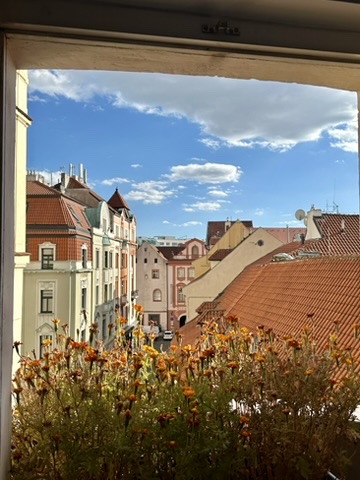
The view from my CEA CAPA classroom.
Another huge difference between my classes in Prague in comparison to Delaware is that all of my classes are held in two buildings, the CEA CAPA building and the building for Anglo American University (also known as AAU). It makes going to and from my classes and study rooms much more convenient. At Delaware, most classes are about a 15-minute walk away, and sometimes I’m rushing to get from one place to another. The distance between CEA CAPA and AAU is only a five-minute metro ride, making it very simple to go from building to building.
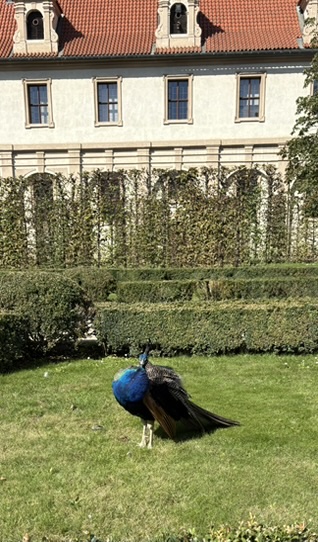
Our unofficial mascot, the peacock, roaming around the school grounds.
The campuses are both wonderful, as AAU is right around the corner from a beautiful courtyard with free roaming peacocks, making it their unofficial mascot. The gardens are breathtaking, with beautiful flowers and other horticulture to view during the beginning of the semester and colorful foliage as it gets colder. It’s a wonderful quiet haven to relax, have lunch, or study, making it one of my favorite features of my school. At the University of Delaware, we have a lot of greenspace, but we definitely don’t have our mascot, the Blue Hen, clucking around our courtyards.
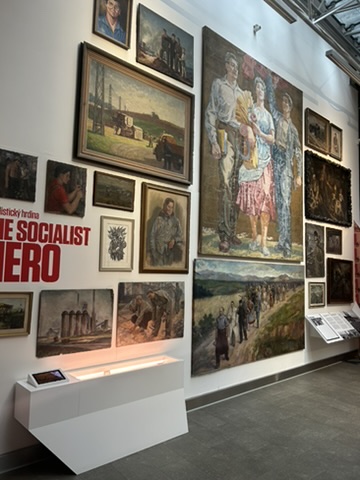
This is a photo from the Museum of Communism.
AAU also has a nice cafe attached to the building called Cafe de Taxis. Almost every student goes there during their class break to stretch their legs or get a caffeine boost from a cappuccino or a latte. The cafe offers a discount to all AAU students, a great benefit, and is quick and convenient. On campus in Delaware, if I want coffee there’s no discount, and I typically order ahead of time via app if the coffee shop is in an on-campus building. As for the CEA CAPA building, it's beautiful. There’s a gorgeous view out of the window of my classroom showing the rooftops of Prague and ornate edifices. The student lounge has free coffee, tea, and other refreshments, and is a great study spot for me to spend my time at.
The classes I am taking in Prague are pretty typical to what you would expect at most universities, some basic business courses and a public speaking course. But, the one special class is my Cultural Food & Brewing Traditions course through CEA CAPA. In this class we learn all about the different foods and drinks that are typically eaten and drunk by Czechs, the cultural impact of these foods, and the effects of history and societal pressures on what people eat and drink.
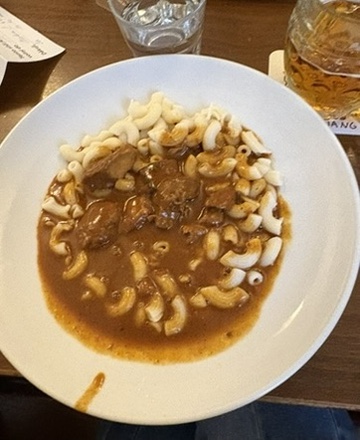
My lunch from my field trip to Lokal, a traditional Czech restaurant.
This class is really interesting as well because we get to go on many field trips to places such as the Museum of Communism, a beer brewery tour, a visit to the Sapa market and a visit to local restaurants that serve traditional food. We also do a lot of kinesthetic learning, like our online cooking Zoom where my group and I prepared schnitzel, mashed potatoes, and fruit dumplings all in the comfort of my apartment. We also tried typical Czech snacks from when there was communist rule, and wrote about our opinions on it. At the University of Delaware, I do a lot of cooking classes and hands-on learning because I’m a hospitality major. Those have always been my favorite courses, so being able to cook recipes abroad has been a bit of comfort to me.
Overall, my experience abroad has been different from my experience at the University of Delaware, but I’ve loved it. Adapting to different timings and schedules was definitely a little tough; as my time goes on, however, I’ve learned to handle the waves of unfamiliarity and embrace the challenges, as they’re all a part of the study abroad experience.
