








Advice for a Semester Studying Abroad in Seoul
Hi! My name is Misa. I recently completed a four-month semester abroad in Seoul, and I wanted to talk about a few things that I wish someone told me before going abroad so I could be better prepared. This will be a good read if it is a few weeks before your study abroad experience begins (so you are still in your home country but you are slowly starting to decide what to pack and how to budget). I hope this helps in some decisions about what to bring or how much to spend!
Although my advice will best suit someone in a similar situation as me (I studied at Sogang University and lived in an on-campus dorm), I tried to write this so it applies to most exchange students in general, studying at any university located in Seoul.
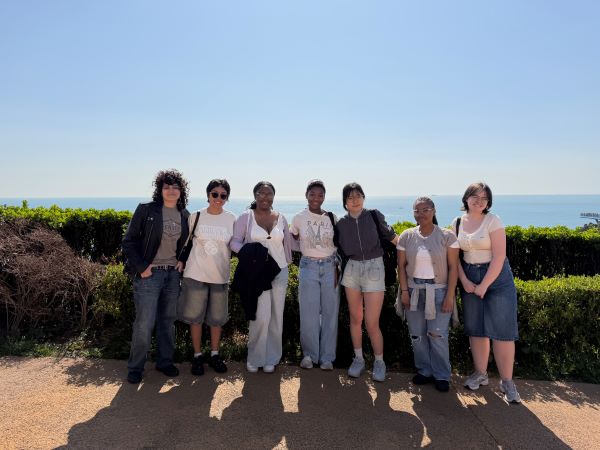
Oryukdo Skywalk in Busan
You cannot do certain things without a Korean phone number/bank account
South Korea is very strict with online transactions. You will want to think about getting a Korean phone number (which comes with getting a SIM card) and/or a Korean bank account (bank account requires a Korean phone number).
Examples of things you can only do with a Korean phone number:
Sign up for any store rewards program
Receive an alert on your phone when your order is ready at a cafe/restaurant (if they do not have buzzers)
Reservations at some restaurants or pop-up stores
Make a Korean account for any website (and any games. I am a gamer, and to be able to play on Korean servers of any multiplayer game you needed a Korean phone number.)
Examples of things you can only do with a Korean bank account (which implies you already have a Korean phone number):
Buy anything online. Any Korean online shopping website will require you to have a card issued by a Korean bank. You will not be able to cheat the system and somehow enter a foreign card. Trust me, I have tried before.
Send money. I found that most local students and small businesses prefer you pay them by bank account transfer, and they tell you their bank account number. There is no easy way to send money from an overseas bank account to a Korean bank account. Also, Koreans do not use apps like Zelle or Venmo.
Pay for services online. The two most common payments for me were paying for laundry and paying for national healthcare (a requirement if you are on a visa). The laundry in my dorm was paid using an app, and to reload money by card, you had to have a Korean bank account. To pay for the monthly national healthcare bill online, you also needed a Korean bank account. The alternative option is to pay for these services by cash at any convenience store, which will not be hard to find, just a little annoying.
Pay using your phone. Apple Pay seldom works. The preferred way to pay is Kakao Pay or Naver Pay, which both require a Korean bank account.
Whether you want to commit to doing either is up to you. I know people who never got a Korean phone number, who got a Korean phone number but not a bank account (that was me!), and those who got both a Korean phone number and a bank account. Most of the services unlocked by having either is for convenience. It is not like you won’t be able to live without a Korean phone number or bank account, but it makes life easier if you have one (or both).
If you decide you want to make a Korean phone number, it is not difficult to do, even if you do not know Korean. I used Chingu Mobile, which is a SIM service directed at foreigners. The entire transaction was in English, and I received my Korean phone number minutes after activating my SIM card. Two important things to note if you do get a SIM card:
Make sure the SIM is a non-tourist one. You will know that it is a non-tourist one if you are able to link your ARC/RC to the SIM card. This is the only way you will get a Korean mobile phone number (which is a number that starts with 010). This is an important distinction because tourist SIM cards sometimes give you a new phone number, but it will never start with 010 which is usually a requirement for any activity I listed above.
Make sure your phone is unlocked. This is a general SIM card requirement, but your phone must not be locked by any other carrier. Mine was, so I had to buy a separate phone.
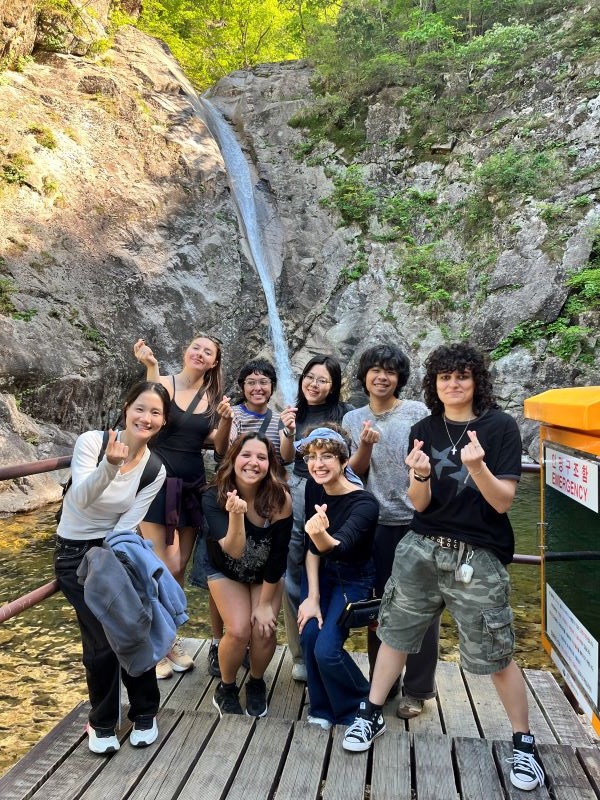
Sokcho trip included in excursions
Making a bank account is also possible with no Korean knowledge. Universities will most likely have an affiliated bank. If the university has a large international student population like Sogang, the bank located on campus will be used to working with international students, and there will be English-speaking staff who will guide you when making a new account. I think you could also go to a reputable bank in a tourist location if your university isn’t as used to working with international students, as they will be more used to speaking English.
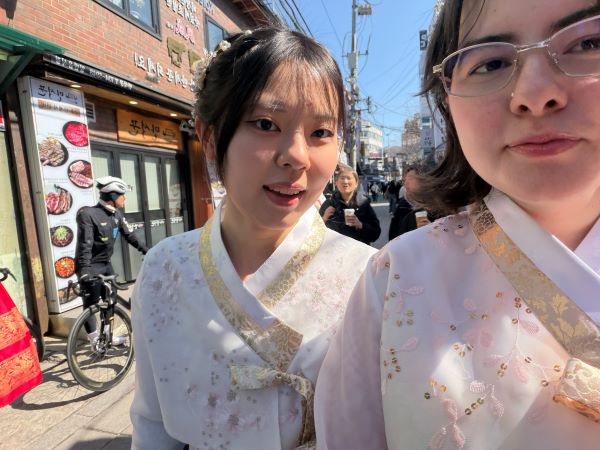
Wearing traditional hanbok
Again, to repeat my point, it’s not like Korea is unlivable without a local phone number or bank account. These are obtained by exchange students mostly for convenience. For me, I opted to get a phone number but not a bank account because I saw more situations where I needed to use a Korean phone number than a Korean bank account, and there were usually solutions for anything that required a Korean bank account. For example…
Shopping:
Use Coupang (and Coupang Eats for food delivery). Both accept foreign cards. Koreans use Coupang more than Amazon anyways.
Sending money: Not all, but some Korean people will accept PayPal as an option, so if a Korean friend is asking you to pay them back for something, you can ask if they (or someone they know) have PayPal. Alternatively, you can ask to pay them in cash. I rarely ever got rejected for the offer of paying by cash.
You need a little bit more cash than you think you do if you do not plan on making a Korean bank account
Building off of the previous point, if you decide to not hold a Korean bank account, you will most likely be paying in cash for some things, like laundry and national insurance. Also, traditional markets prefer cash. I wanted to emphasize this point because South Korea has a reputation of being a cashless society. While that is in many ways true (many physical stores prefer or only accept card), when you are there for an extended period of time, there are times when you still may need cash. There will always be a global ATM nearby if you are in Seoul to take out cash from, but note that overseas banks usually charge a transaction fee every time you take out cash. Additionally, make sure you always carry your physical card on you, as, like I mentioned above, Apple Pay rarely ever works.
Korea most likely uses a different type of plug than your home country
Korea’s outlets are very circular. They use type C or F, so perhaps invest in buying an outlet converter before you come to Korea if you want to make sure your electronic devices will be able to charge from day one. Of course, even if you forget, they sell plugs that you can use your USB-C/A cords with practically anywhere, so it is not a big concern.
The one thing I would make sure to buy before coming to Korea is if you specifically need a type B to type C/F converter (mainly for laptop chargers that need a lot of power, if your plug has three prongs). I had a hard time finding one once I was in Korea, so I was glad I brought one before. Also, this means if you were planning to bring products like a hair straightener or dryer, they will not work without a proper converter.
Locate your nearest convenience store/supermarket (E-mart or Homeplus)/Daiso
When I moved into the dorm, the first thing I realized we were going to need was toilet paper, hand soap, and a towel to dry our hands with. It is important to know where to get daily things quickly so you aren’t in a situation where you have no toilet paper or food. Seoul is well connected, so my best guess is that you will be relatively close to a convenience store, a supermarket, and a Daiso (Korea’s $1 store). It’s good to know where to go for what. I went to…
Convenience store for fast meals, snacks, and drinks.
Daiso for hygienic goods, such as cleaning wipes, toilet plunger, toilet paper (in small quantities), hand soap, dish wash, dish sponge, toothbrush, etc.
Supermarkets for hygienic goods that you need large quantities of (for me, that was toilet paper, sanitary items, disposable utensils, laundry detergent) and fresh food.
If you know where these stores are around where your residence is, you will be able to hit the basics of what you need to live comfortably.
Download Naver/Kakao Maps
Google/Apple Maps are not preferred in Korea, because they are not updated. The most accurate map app in Korea is Naver or Kakao Maps. Not only are both apps accurate, but they will be very helpful in navigating the public transportation system.
Taxi/busses usually speed on bumpy roads
Seoul is very hilly, but that doesn’t seem to stop taxi and bus drivers from speeding. Actually, in my experience, it is more rare to find a driver who actually follows the speed limit than one who doesn’t. Even my friend who usually does not get motion sickness sometimes got sick from how crazy these rides were. If you are prone to motion sickness, I would make sure to bring medicine with you for this.
Seoul tends to have bad air quality
Many of my peers felt stuffy/dry throat/congestion because of how bad the air quality consistently was. It was typically over 50, with it sometimes being over 100. If you think you will be affected more easily by that (ex: allergies), make sure to bring medicine with you.
Check the rules and regulations of your school/living area, as places tend to be stricter than in the US
At least coming from the US, certain regulations are definitely stricter in South Korea. It is important to know what rules and regulations apply to your visa, school, and living area, so you don’t break it accidentally and suffer major consequences.
Some examples:
You are legally not allowed to protest if you are not a citizen of South Korea.
My study abroad university (Sogang) had a strict attendance policy. For once-a-week classes, if you missed three classes, you automatically failed the class no matter what.
Seoul separates its trash into more detailed groups than what I was used to in the US. They also usually require you to use district specific trash bags. You can buy trash bags at any convenience store, so this means that if you buy a trash bag at a convenience store in a different district than where you reside, it might not be the right one. Also, if you separate the trash incorrectly (ex: throw away plastic as regular trash), the garbage collectors may refuse to pick up your trash.
My dorm did not allow hair straighteners, because it was considered a fire hazard (hair dryers were okay).
You are the one who is the guest in a country that is not yours. As a guest, you should respect the other country’s rules and regulations.
Seoul has a lot to offer; it’s a great chance to visit places you wouldn’t usually go to!
Seoul has a well-connected public transportation system, so it is easy to go anywhere in the city. I highly recommend going to different neighborhoods and exploring around. My personal favorites:
Museums:
The National Folk Museum of Korea (in Jongno)
The War Memorial of Korea (in Yongsan)
Many museums are free in Seoul! Take your chance and go! Also, all palaces have free admission on the last Wednesday of every month.
Shopping Malls:
Lotte Tower (mall)/Lotte World (amusement park, connected to each other) (in Songpa)
IFC Mall (in Yeongdeungpo)
Times Square (in Yeongdeungpo)
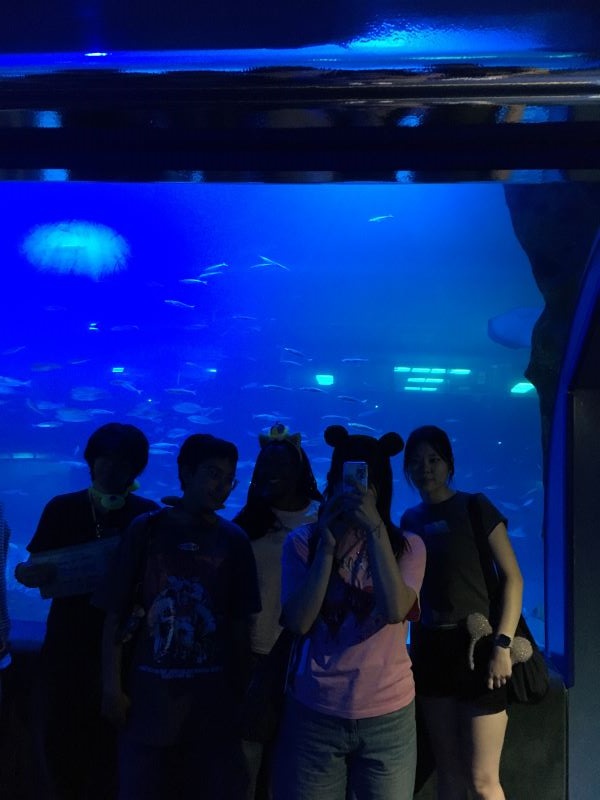
Lotte Aquarium in Lotte Tower
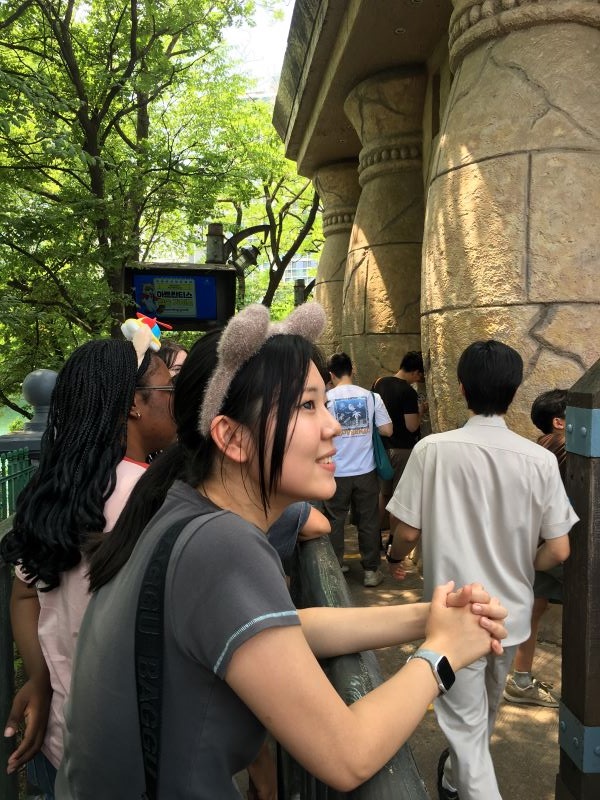
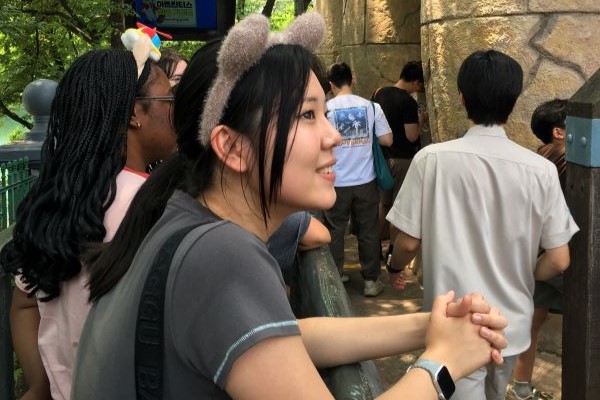
Waiting for a rollercoaster in Lotte World
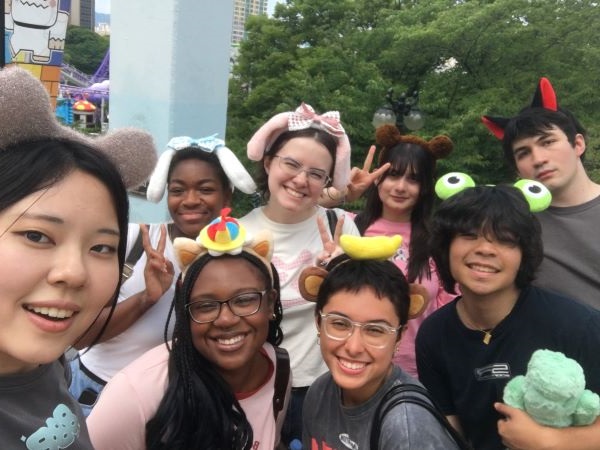
With my friends at Lotte World
Districts:
Yeouido: Cherry blossoms, Han River Park
Hapjeong-dong: Delicious restaurants, interesting malls
Yeonnam-dong: Cute little shops and cafes
Daeheung-dong: Gyeongui Line Park, open concept restaurants and cafes
Seongsu-dong: Pop-up stores
Outside Seoul but easy to go to:
Incheon: Chinatown and Wolmi Park
Eunpyeong Hanok Village (technically still Seoul but on the outskirts)
This post was written by Misa Fukushima, a student at Michigan State University who studied abroad in Seoul, South Korea.